The 5 Best Micro-Infusion Systems for Hooded Eyes in 2026, Compared
Qure, Seranova, Glamory, Glov and Botanique Paris: the five at-home microneedling systems everyone compares, reviewed on the one test most comparisons skip. How do they treat hooded eyes, sagging eyelids and the thin skin around your eyes?
🔬 Tap the science notes to see how we checked each claim
☀️ Summer Eye Tip: Long bright days mean more squinting, more UV and more dehydration, three things the thin skin around your eyes handles worse than anywhere else on your face. Sunglasses and SPF protect it from the outside. A consistent at-home routine is how most people support it from the inside of their bathroom cabinet, and it is why searches for at-home micro-infusion spike every summer.
If you have typed "microneedling at home" or "hooded eye treatment" into a search bar this year, you have plenty of company. The first is searched roughly 27,000 times a month in the US; "hooded eyes" alone clears 74,000. Somewhere between those two searches sits a category that has quietly taken over the at-home skincare conversation: micro-infusion.
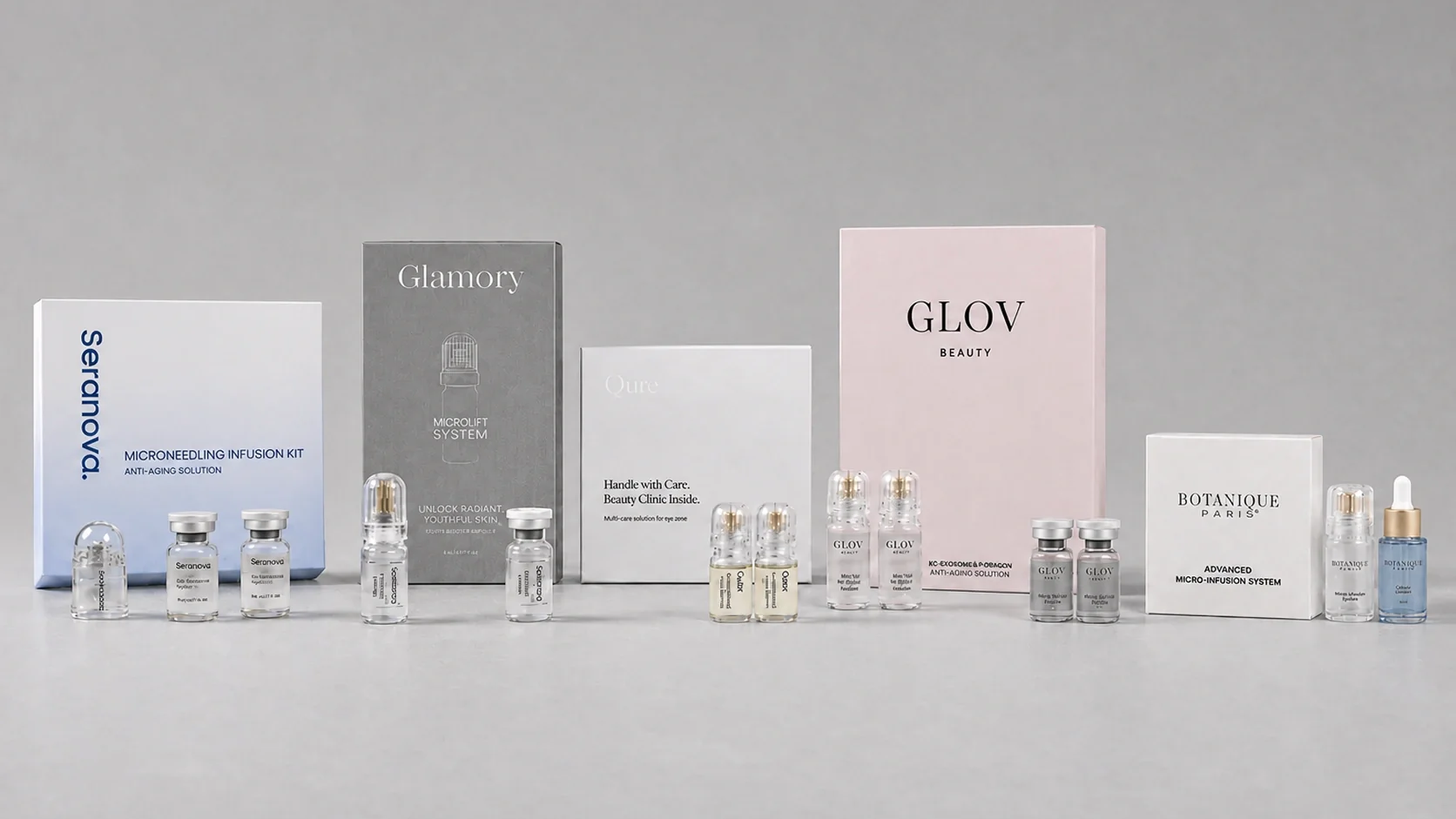
Five brands dominate that conversation right now: Qure, Seranova, Glamory, Glov and Botanique Paris. Their kits look similar in photos. Their marketing uses many of the same words. Their prices are not far apart. And yet, when you read the fine print, they are not interchangeable, especially if the reason you are here is the area everyone seems to ask about: crepey lids, fine lines at the corners, a heavier, more hooded look than you had five years ago.
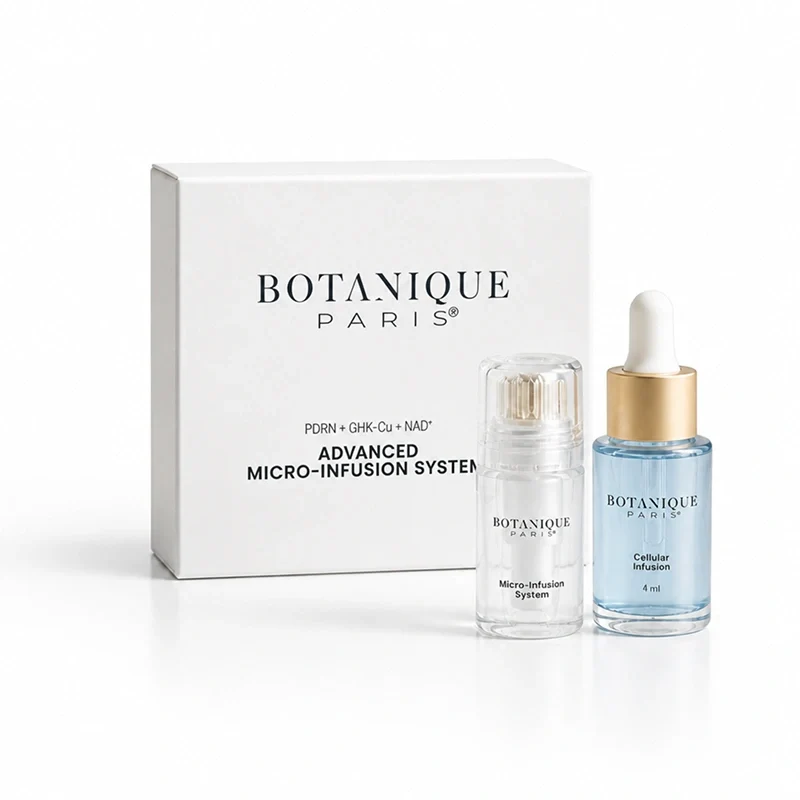
Botanique Paris Micro-Infusion System for Upper Eyelids
We read every product page, ingredient list, usage guide and guarantee policy across the five systems everyone is comparing. Only one is engineered for the zone most readers are here for: 0.25mm eyelid-calibrated needles, an eye-specific serum dose, and a 120-day money-back guarantee, from the brand behind RevitalEyes.
Like most things in skincare, it is situational, and if you have an active skin condition around the eyes, a history of reactions to needling, or any medical eyelid concern such as true ptosis (a drooping muscle rather than lax skin), the answer is none of the above until you have spoken to a doctor. Drooping that appears suddenly is a medical question, not a cosmetic one.
That aside: if your concern is your upper lids, sagging or floppy eyelids, crow's feet, or a hooded, crepey look around the eyes, the comparison is not close. Botanique Paris is the only system in the category engineered for that zone, at 0.25mm, with an eye-specific formula and the longest guarantee of the five, and it comes from the company behind RevitalEyes, a brand that has specialized in around-eye devices from the start. The price objection reads differently next to the alternatives it is designed to postpone: filler appointments at $700 to $1,200 per session, repeating every 6 to 12 months.
If your concerns are full-face, forehead lines, smile lines, tone across the cheeks, pick between Qure (the most established, best-documented face system) and Seranova (the most awarded, with an equally strong guarantee). If you mostly want to try the format cheaply, Glov is the gentlest entry price and Glamory runs the deepest promotions, just keep both away from your eyelids, as their own instructions require.
💡 Did You Know? Micro-infusion did not start in a bathroom cabinet. It is the at-home descendant of infusion facials that cosmetic clinics and medical spas have offered for years, where a session is commonly priced at $300 or more. The home kits shrank the format down to a stamp, a sealed serum vial and a five-minute routine.
What Is Micro-Infusion?
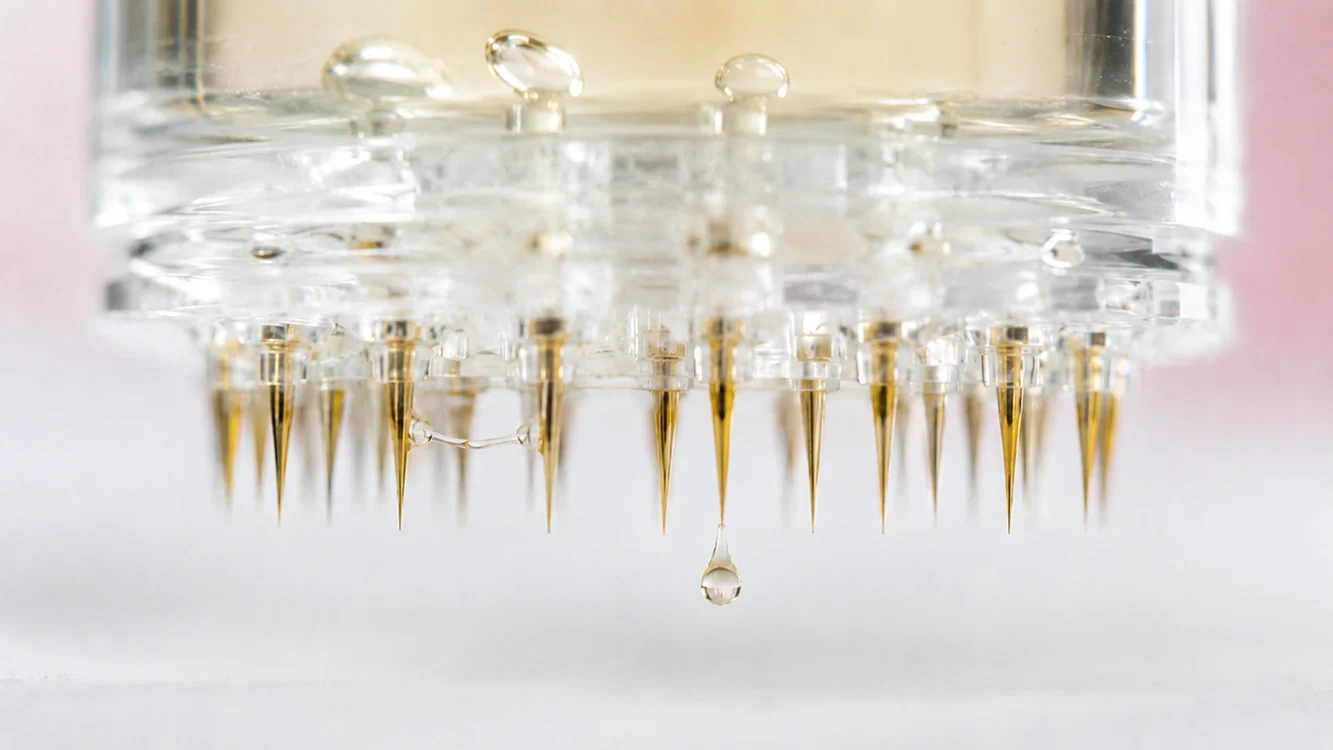
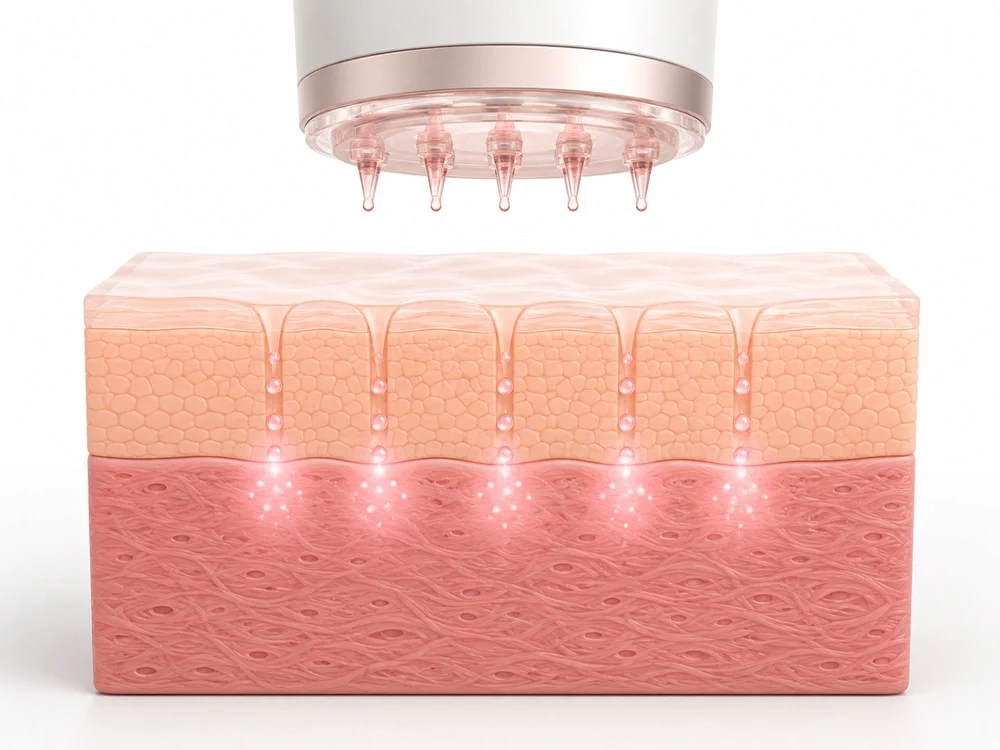
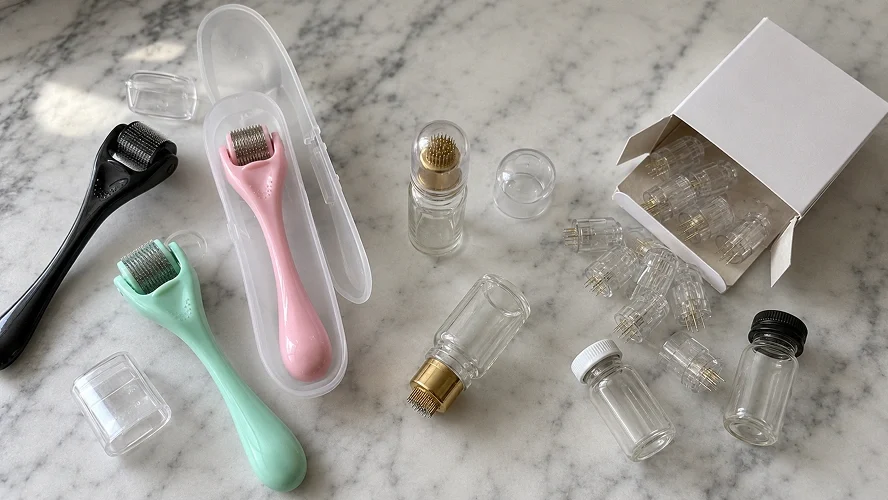
Micro-infusion (also written microinfusion, and sold in clinics as the micro-infusion facial) is a five-minute at-home treatment that pairs two things a jar of cream cannot do at once. A head of ultra-fine needles, each finer than a human hair, is stamped gently across clean skin, creating temporary micro-channels in the surface. At the same time, a serum reservoir feeds active ingredients through those channels while they are open, instead of leaving them to sit on top of the skin. The channels close again within the hour; the routine is repeated every one to two weeks.
🔬 Science note: why delivery matters
The outermost layer of skin, the stratum corneum, exists to keep things out, and it is very good at its job: most of what you apply topically stays on the surface. Microneedle-based delivery is one of the most studied ways to move cosmetic ingredients past that barrier, which is why the format keeps appearing in peer-reviewed drug-delivery and dermatology literature (see citations 1, 5 and 6 below).
What Does Micro-Infusion Do?
Used consistently, micro-infusion is designed to do three things. The stamping itself signals the skin's natural renewal process, the mechanism behind professional collagen-induction treatments studied since the mid-2000s. The open channels let humectants, vitamins and peptide blends reach below the surface, where creams rarely go. And because the serum is sealed in single-use vials with sterile needle heads, every session delivers the same dose in the same way. Users across the category most often report the same cluster of visible changes: skin that looks plumper and more hydrated, softer-looking fine lines, and a firmer, fresher look over 4 to 12 weeks. All of it concerns the appearance of skin; none of it is a medical treatment.
✦ Interactive Guide
Know Your Needle Depths
Tap or hover over each depth. This single number decides where on your face a system belongs.
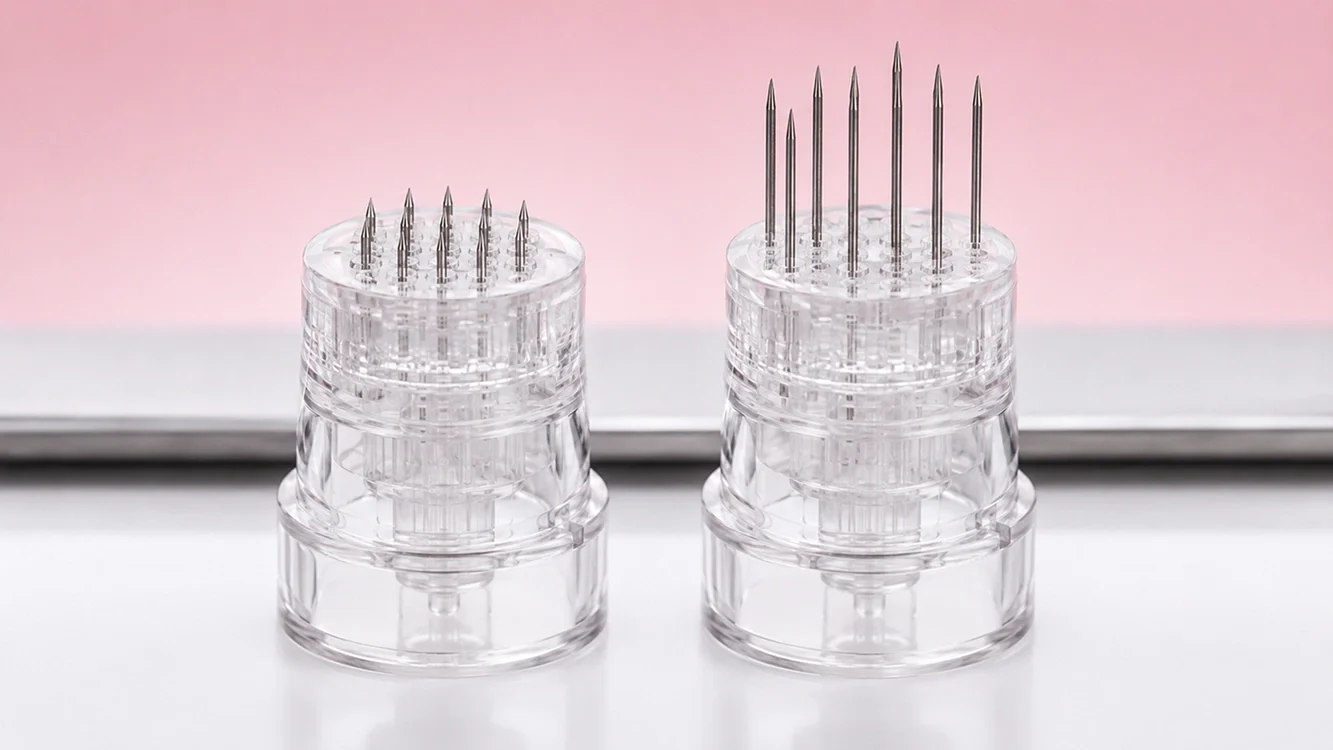
0.25mm: the eyelid calibration. Shallow enough for the thinnest skin on your body. Botanique Paris builds its upper-eye system at exactly this depth.
✦ Step by Step
What Happens During a Session
A real-time look at the five minutes, from vial to overnight absorption.
1. Fill the chamber
Twist open the device, add the contents of one sealed serum vial, and attach a fresh sterile needle head. Every session starts with a new head; nothing is reused.
Simplified sequence. Always follow the instruction guide included with your specific system.
One more thing the five minutes will not include: drama. Most users across the category describe a light tingling rather than pain, and the needle tips on every system in this roundup are finer than a human hair. The redness, when it appears, is mild and short-lived.
Since visible results in this category build gradually, consistency matters more than intensity. Every brand in this comparison recommends a repeating schedule, once every week or two, rather than a single dramatic session. Keep that in mind when you compare kits: the real question is which system you will actually keep using, on the area you actually care about.
How Deep Should Eye-Area Needling Go?
Eyelid skin is around three times thinner than cheek skin. Depth calibration is the whole ballgame.
0mm
Surface (Stratum Corneum)
The barrier layer. Creams and serums applied by hand largely stay here.
0.25mm
Eyelid Calibration Zone ★ EYE-AREA TARGET
Shallow delivery matched to the thinnest skin on the body: the brow bone and upper orbital rim.
Serum delivery ↑Gentle on thin skinMinimal downtime
0.5mm
Face Calibration Zone
The standard depth for cheeks, forehead and smile lines, where skin is thicker. This is where Qure, Seranova, Glamory and Glov operate.
◎
0.25mm Calibration
The depth Botanique Paris uses for the upper-eye zone
⚡
Delivery Channels
Temporary micro-pathways that close within about an hour
◉
Target Zone
Brow bone and orbital rim, never the mobile lid or lash line
● The Depth Rule of Thumb. A 0.5mm tip is not "wrong", it is simply sized for cheek-thickness skin. Four of the five brands in this roundup use it, and their own usage guides reflect the mismatch near the eyes: Seranova instructs users to keep roughly 3cm (1.5 inches) of distance from the eye area, and Glamory excludes the eyelids and under-eyes outright. When a brand tells you where not to use its own product, believe it. It also tells you what a purpose-built eye-area system has to do differently.
Micro-infusion brands lean heavily on user studies and surveys. Here are the headline figures each brand publishes, side by side.
70%
showed visible periocular firming by Day 15
rising to 95% by study end; the only figure in this grid measured in a placebo-controlled ingredient study rather than a self-report survey
As cited by Botanique Paris (60-day controlled ingredient study)
93%
noticed results the next day
after their first treatment, in a 30-person user study across ages 25 to 65
As published by Qure Skincare (user study, 6 treatments)
70%
said fine lines looked smoother
in the same 30-person self-assessment study
As published by Qure Skincare (user study)
93%
showed visibly firmer-looking skin
in a 12-week clinical evaluation of consistent users
As published by Seranova (12-week study)
87%
reported better results than their creams
compared with classic anti-aging creams or serums they had used before
As published by Seranova (customer survey)
97%
saw smoother, clearer-looking skin
in the brand's published user-results block
As published by Glov Beauty
The Science Behind What Is Actually in the Vials
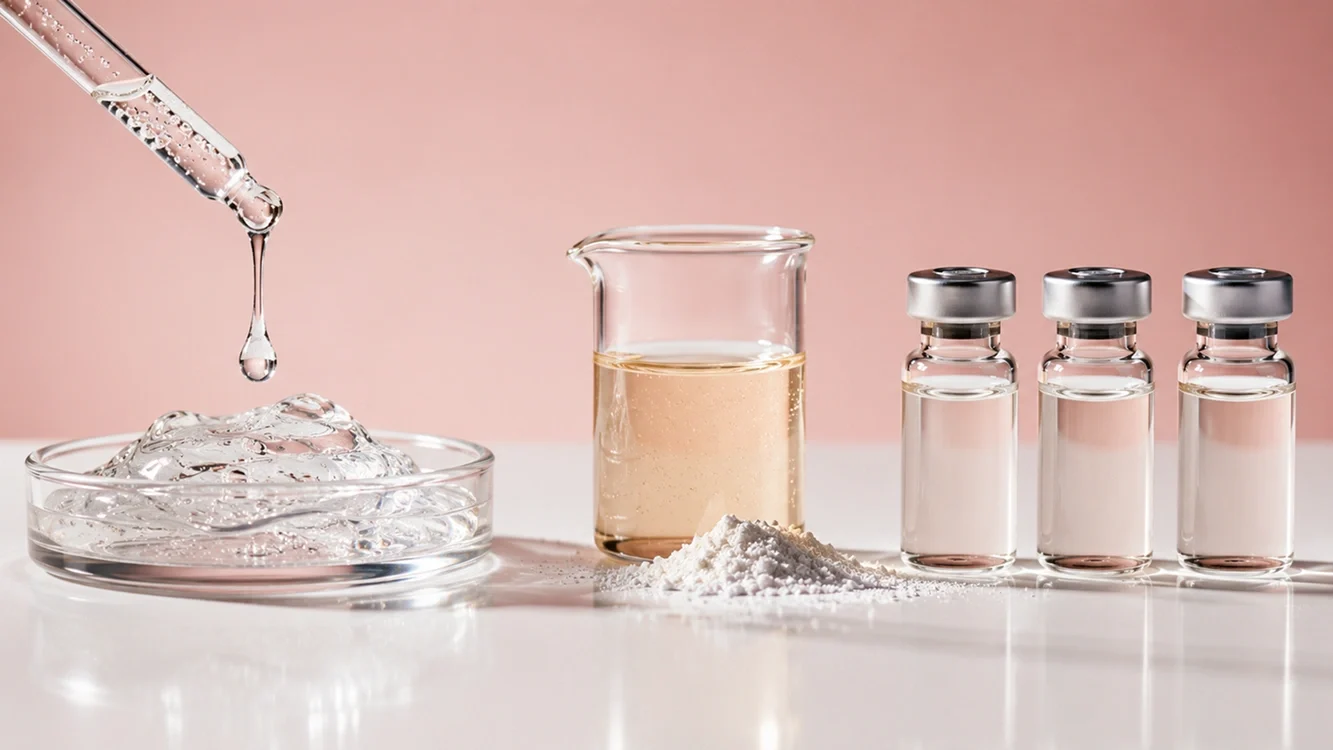
Formulas differ brand to brand, but nearly every serum in this category is built from three ingredient families.
Humectants
Mechanism: Water-binding ingredients like hyaluronic acid and glycerin draw and hold moisture in the skin, and delivering them below the surface barrier is the point of the whole format.
Result: skin looks plumper and more hydrated, which softens the appearance of fine lines.
Vitamins & B-Derivatives
Mechanism: Niacinamide (vitamin B3) and panthenol (pro-vitamin B5) are among the most studied cosmetic ingredients for the look of tone, texture and a healthy skin barrier.
Result: a more even-looking, smoother-looking complexion with consistent use.
Peptide Blends
Mechanism: Short chains of amino acids used across modern skincare to support the look of firmness and elasticity. Each brand guards its own blend, and blends built for cheek skin are not automatically suited to eyelid skin.
Result: firmer-looking, bouncier-looking skin over weeks of use.
What the fine print shows: every brand in this roundup publishes a different formula, but only one of the five states that its serum dose and formula are calibrated specifically for the eyelid zone rather than the whole face. That distinction matters more than any single ingredient name.
Curious about a specific formula? Each brand's full ingredient list is on its own product page, linked in the reviews below.
Micro-Infusion vs. Traditional Eye Creams
Understanding the fundamental difference in how the two reach, or fail to reach, the skin you are trying to change.
How It Works
✓ Micro-InfusionDelivers actives through temporary micro-channels while they are open, past the surface barrier
✕ Eye CreamsSit on the stratum corneum, the layer designed to keep ingredients out
Where Ingredients Go
✓ Micro-InfusionBelow the surface, at the depth the tips are calibrated for
✕ Eye CreamsMostly the surface; a large share evaporates or rubs off on pillows
Time Per Session
✓ Micro-InfusionAbout five minutes, once every one to two weeks
✕ Eye CreamsTwice daily, indefinitely, to maintain any effect
Results Timeline
✓ Micro-InfusionBrands report visible changes in appearance within days to 8 weeks of consistent use
✕ Eye CreamsOften 8 to 12 weeks or longer, with highly variable results
Precision for Small Zones
✓ Micro-InfusionStamp head treats exactly where it is placed, pass by pass
✕ Eye CreamsMigrates; heavy creams can drift into eyes and cause irritation
Dose Consistency
✓ Micro-InfusionSealed single-use vials deliver the same measured dose every session
✕ Eye CreamsA "pea-sized amount" means something different every morning
Hygiene
✓ Micro-InfusionSterile, disposable needle heads on every system in this roundup
✕ Eye CreamsOpen jars collect fingers, air and bacteria for months
Why Micro-Infusion Is Different
Delivery past the surface barrier, not on top of it
Practitioners who work with needling devices keep repeating the same theme: the eye zone plays by different rules.
"Eyelid skin is the thinnest skin on the body. A depth that is perfectly gentle on a cheek is simply not calibrated for the orbital area, which is why device instructions treat that zone so differently."
Daniela Reyes
Licensed Medical Aesthetician
"What I like about the infusion format is the hygiene logic: a sealed vial and a fresh sterile head per session. Around the eyes, where skin is delicate and unforgiving, that discipline matters even more."
Whitney Cole
Aesthetic Nurse Practitioner
"Delivery is half the formula. You can put excellent humectants and peptides in a vial, but where and how deep they are placed decides what the user actually sees in the mirror."
Marcus Liang
Cosmetic Chemist
★ ✦ ★
What Real Users Are Saying
Verbatim reviews published on the five brands' own sites. We quote them as written; individual results vary.
★★★★★
Ellie V.
Verified Qure customer
"I just turned 57 years. My skin was extremely dry and while using this product my skin RETURNED to LIFE! My coworkers ask me what I use in my skin.. and I tell them."
Using: Qure Micro-Infusion Facial System
★★★★★
Diane A., 71
Verified Seranova customer
"My wrinkles weren't that bad, but my face was beginning to reveal my true age. I used my 3rd treatment and I'm starting to see firmer skin and fewer wrinkles!!!!!"
Using: Seranova Micro Infusion System
★★★★★
Sarah M., 67
Verified Glamory customer
"I've been using this micro-infusion product for a month, and the change in my skin is remarkable. My wrinkles have softened, and the sagging around my jawline has lifted."
Using: Glamory MicroLift System
★★★★★
Cathy M., 42
Verified Glamory customer
"I've spent a fortune on creams that did nothing. This actually works! My skin is more hydrated, and those annoying fine lines on my forehead are less noticeable."
Using: Glamory MicroLift System
★★★★★
Annalise C.
Verified Botanique Paris customer
"My hooded eyes made me look 10 years older. After 8 weeks, there's visible space between my lash line and crease again. I can't believe this worked without surgery."
Using: Botanique Paris Micro-Infusion for Upper Eyes
★★★★★
Leena D., 39
Verified Botanique Paris customer
"My biggest insecurity are my hooded eye lids but I'm too scared to get surgical procedures done. This Micro-Infusion System has totally lifted my eyelids with just a few weeks of use!!"
Using: Botanique Paris Micro-Infusion for Upper Eyes
Why the eye-area reviews stand out: notice that the face-system reviews talk about cheeks, foreheads and jawlines, while the upper-eye reviews talk about lids and lash lines. Reviews follow calibration. People get results where the tool was designed to work.
Quotes reproduced verbatim from each brand's published customer reviews. Based on individual user experience; results may vary.
The home kits in this roundup are consumer versions of a format that professionals have used for years.
⚕
Cosmetic Dermatology Clinics
The original setting
Infusion facials appear on clinic menus at $300 or more per session, typically as a series.
✿
Medical Spas
The volume setting
Med-spas made needling-plus-serum treatments a staple of pre-event skincare routines.
⚖
Aesthetic Nurse Practices
The protocol setting
Nurse-led studios pair needling devices with strict hygiene protocols, the standard home kits now imitate.
❀
K-Beauty Clinics
The trend engine
Seoul's aesthetic clinics popularized serum-infusion facials years before the format reached Western bathrooms.
⚙
Device Manufacturers
The engineering setting
Sterile single-use needle heads and sealed vials came from professional-device manufacturing standards.
🔬
Cosmetic Research Labs
The evidence setting
Microneedle-based delivery is an active research field in peer-reviewed cosmetic and drug-delivery literature.
✦ The Comparison
The 5 Systems, Reviewed
Every claim below comes from each brand's own published product pages, guides and policies, as of July 2026.
Best for the Eye Area: Botanique Paris
Start with the specialist, and our top pick. Botanique Paris made its name with RevitalEyes, an under-eye device used by a community it counts in the hundreds of thousands, and its Micro-Infusion System for Upper Eyelids is the only system in this roundup engineered for one zone instead of the whole face. The differences are concrete:
0.25mm needle depth, half the category standard, matched to eyelid-thickness skin
Measured 0.5mL dose per session, calibrated for both upper lids
Millimeter-precise protocol: brow bone and orbital rim, 5 to 7mm above the lash line, twice a week
Eye-specific serum, formulated for lid skin rather than borrowed from a face kit
120-day money-back guarantee, the longest here, plus free shipping on all orders
It is also the only system whose reviews talk about lids, creases and hooding rather than cheeks. And the price reads differently in context: the alternative it is built to postpone is upper-lid filler at roughly $700 to $1,200 per session, repeating every 6 to 12 months, so a full season of this routine costs a fraction of one visit.
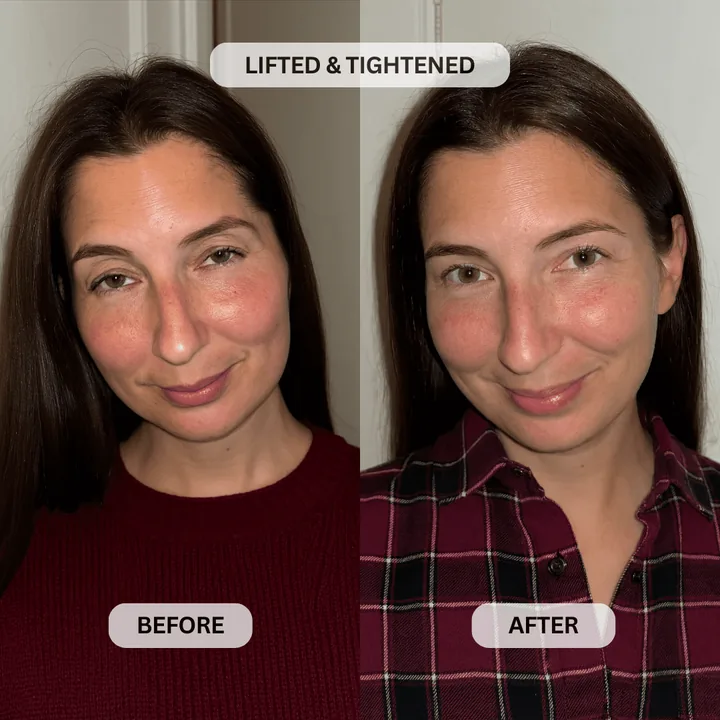
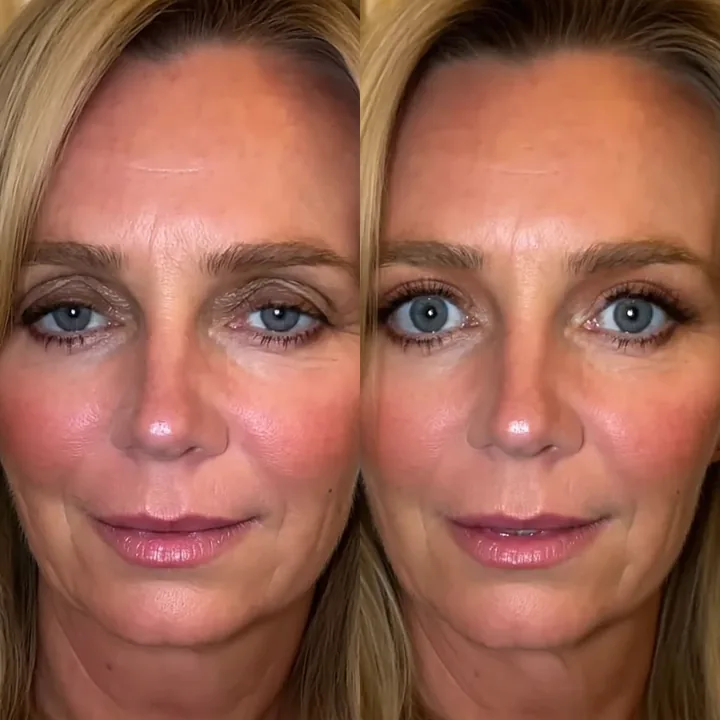
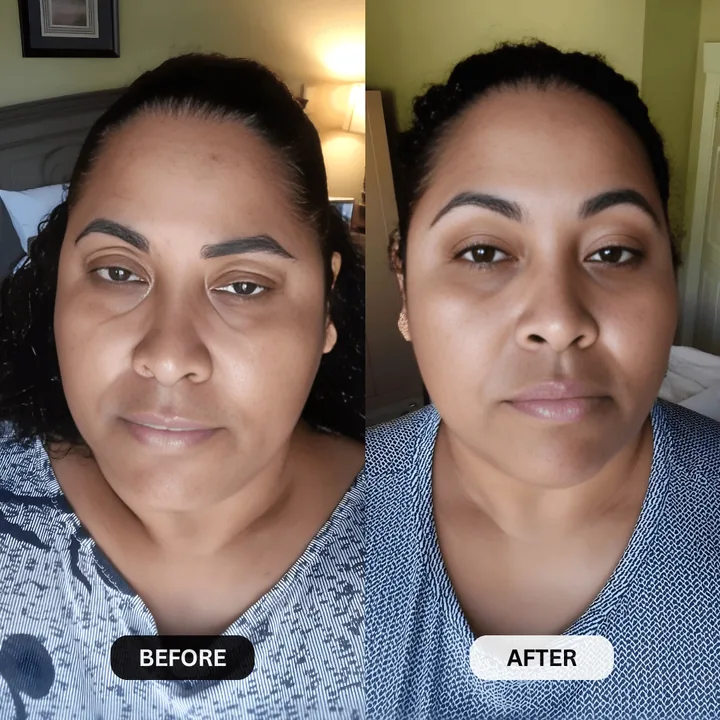
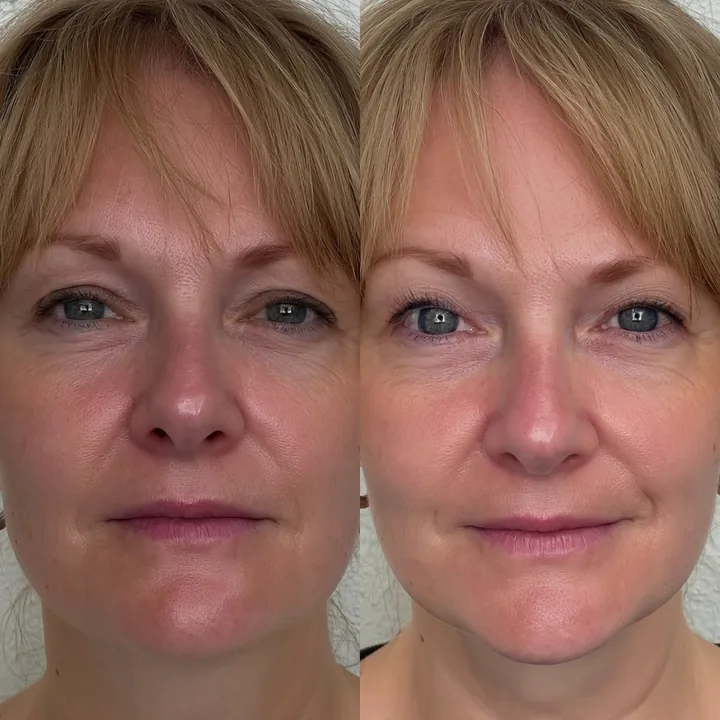
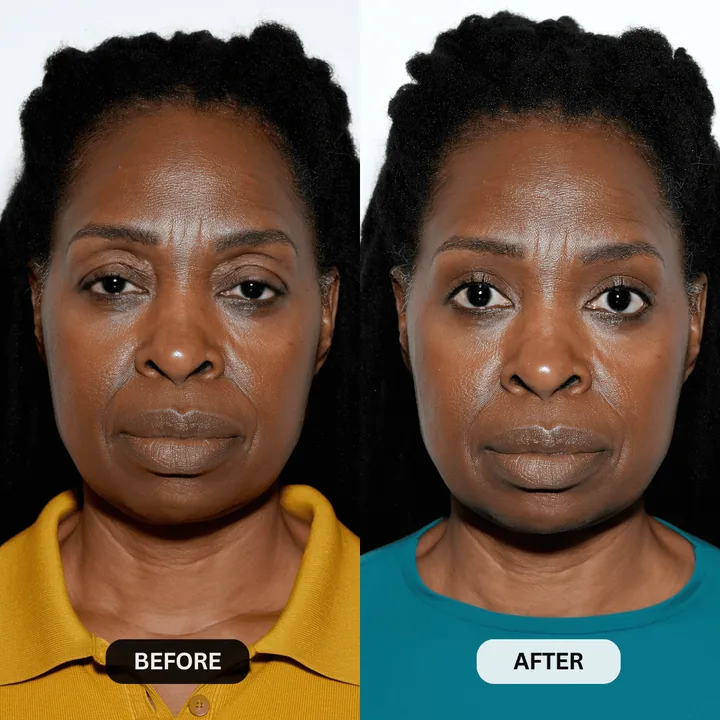
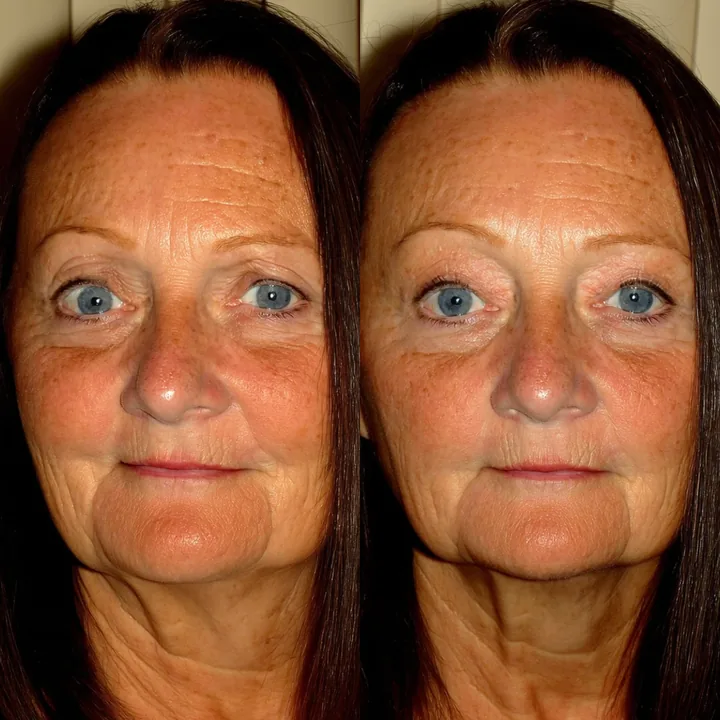
Hooded Eyes, Before & After
Customer photos as published on the Botanique Paris product page. Swipe to see more. Individual results may vary.
"Four brands tell you how carefully to bring a face tool near your eyes. One brand engineered the tool for the eyes and tells you exactly where to place it. If the eye area is why you are reading this comparison, that is the whole answer."
Our reviewer's verdict
✓ Pros:
The only system purpose-built for the upper-eye zone, with depth, dose, serum and protocol all calibrated to it; the only brand here specialized in around-eye care; the longest guarantee of the five.
⚠ Cons:
Treats the eye zone only, so it will not replace a full-face system; premium monthly cost next to the budget brands; results build with consistent twice-weekly use rather than overnight.
120-day money-back guarantee · Free shipping on all orders
Best Known Name: Qure
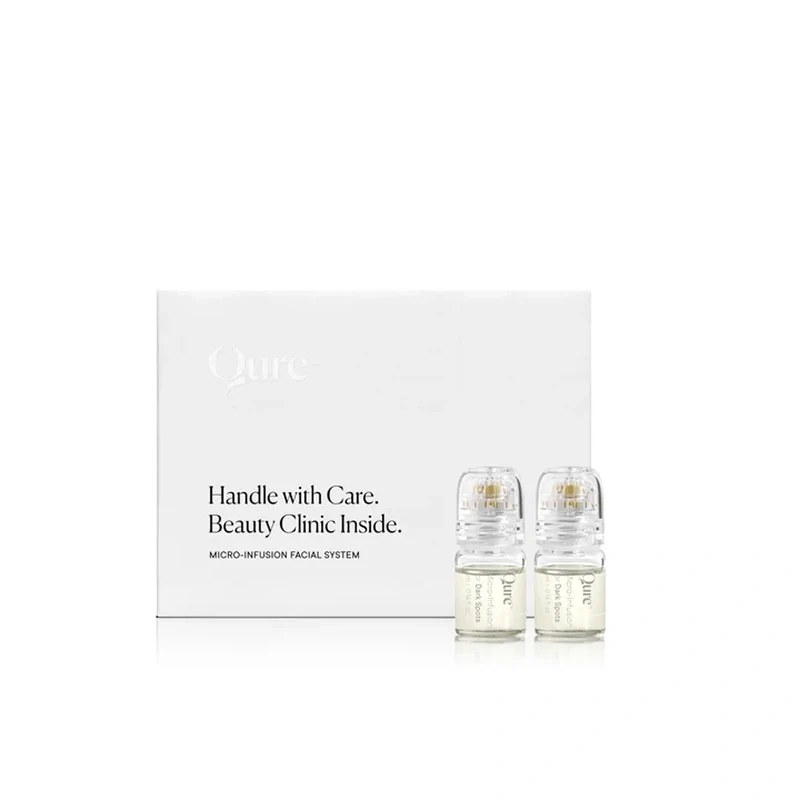
Qure is the brand most people meet first, and the polish shows. The Qure micro-infusion system is a stamp, not a roller, with 24K gold-plated, EO-sterilized 0.5mm needle heads that are disposed of after every session, and a choice of two serums (dark spots or wrinkles) that can even be mixed. The proof stack is the deepest in the category: a published 30-person user study, an independent dermatologic safety evaluation across all skin types, and a network of more than 50 board-certified dermatologists who recommend it. On the eye question, Qure is permissive but careful: crow's feet are allowed with "very gentle pressure and only one pass." That is a face system being used cautiously near the eyes, not an eye system, and the 0.5mm face-calibrated depth is exactly why the caution exists.
"Qure earned its reputation: disposable sterile heads, real published testing, and a serum menu. For cheeks, forehead and smile lines it is the obvious benchmark. The eye area is where its one-depth design meets its limit."
Our reviewer's verdict
✓ Pros:
Most established brand in the category, stamp format with single-use sterile heads, two mixable serum options, published user study and independent safety evaluation, 90-day money-back guarantee.
⚠ Cons:
Single 0.5mm depth calibrated for the face; around-eye use allowed only with extra caution; premium pricing; guarantee requires documented before-and-after photos every two weeks.
Shop on QureSkincare.com ↗
Most Awarded: Seranova
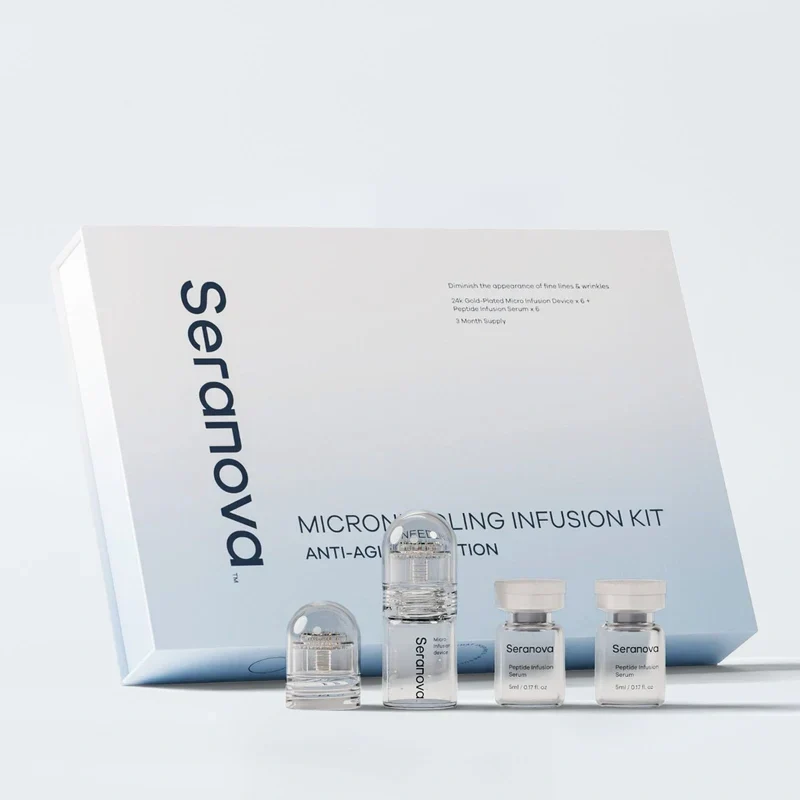
Seranova is the volume player: the brand reports more than a million units sold, 6,690 product reviews at 4.8 stars, and a trophy shelf that includes a Marie Claire UK 2025 award for Best Innovation: At-Home Treatment. The system itself is a 0.5mm stainless-steel stamp with single-use sterile heads and vials, a dermatologist-created application guide, and one of the friendlier guarantees in the category at 90 days. Its eye-area policy is the strictest of the five, and admirably honest: keep a minimum distance of roughly 3cm (1.5 inches) from the eyes. For lids and crow's feet, Seranova's answer is a separate product entirely (under-eye patches), which tells you how the brand itself sizes up its stamp for that zone.
"Seranova runs the most transparent playbook here: big user base, real awards, clear instructions. And those clear instructions are precisely what rule it out for the eye area, by a margin of three centimeters."
Our reviewer's verdict
✓ Pros:
Huge review base (6,690 reviews, 4.8/5), Marie Claire UK 2025 award winner, dermatologist-led guides, single-use sterile heads and vials, 90-day results-or-refund guarantee, free shipping on first orders.
⚠ Cons:
Explicitly instructs users to stay about 3cm away from the eye region; 0.5mm face calibration; eye concerns require buying a separate patch product; guarantee requires monthly progress photos.
Shop on Seranova.com ↗
Best Promo Pricing: Glamory
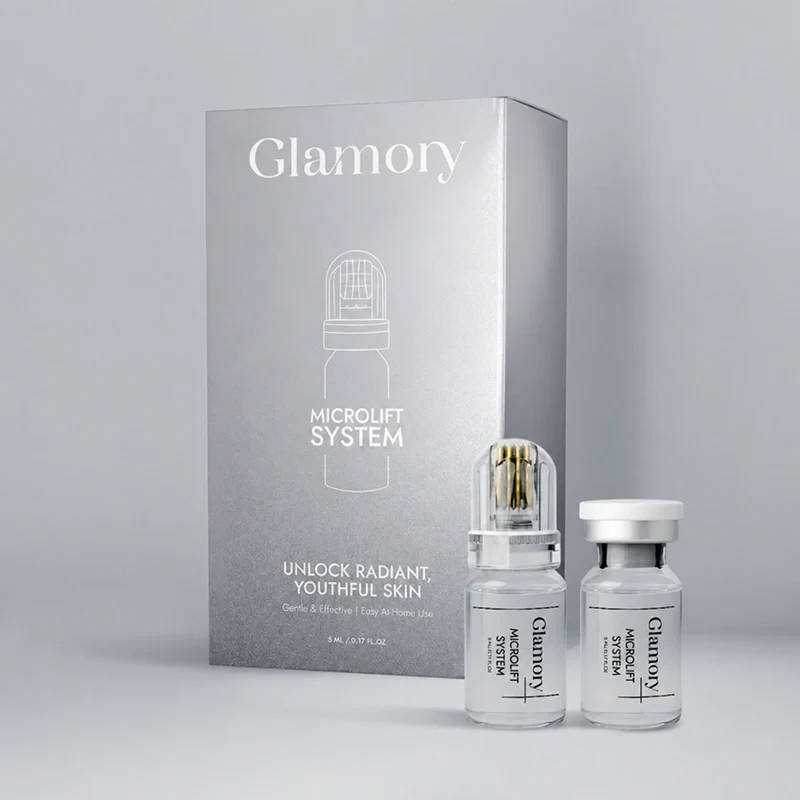
Glamory's MicroLift micro-infusion roller is the deal-hunter's entry into the category. It is the only roller in this roundup, with hypoallergenic 24K gold-plated 0.5mm needles, and its packages routinely run at steep promotional discounts that bring the cost per treatment to the lowest advertised figure of the five. The formula highlights familiar names: niacinamide, sodium hyaluronate, beta-glucan and a peptide duo. Two honest caveats. First, the eye policy: Glamory allows use around the eye area but tells users plainly to avoid the eyelids and directly under the eyes. Second, the fine print: the headline "no questions asked" 30-day guarantee is limited elsewhere in the policy to unopened, unused product, which is worth knowing before you count on it.
"As a value play for the face, the MicroLift makes sense. Just read your own eyelids out of the plan, because the brand does, and read the return policy as carefully as the sales page."
Our reviewer's verdict
✓ Pros:
Lowest advertised per-treatment cost of the five, 24K gold-plated needles, roller covers large areas quickly, published 4.8/5 rating from a claimed 15,000+ customers, one-time purchases with no subscription.
⚠ Cons:
Explicitly excludes eyelids and under-eyes; rolling drags needles at an angle across thin skin; guarantee fine print contradicts the "no questions asked" headline; single-use guidance is inconsistent across the page.
Shop on Try-Glamory.com ↗
Best Budget Entry: Glov
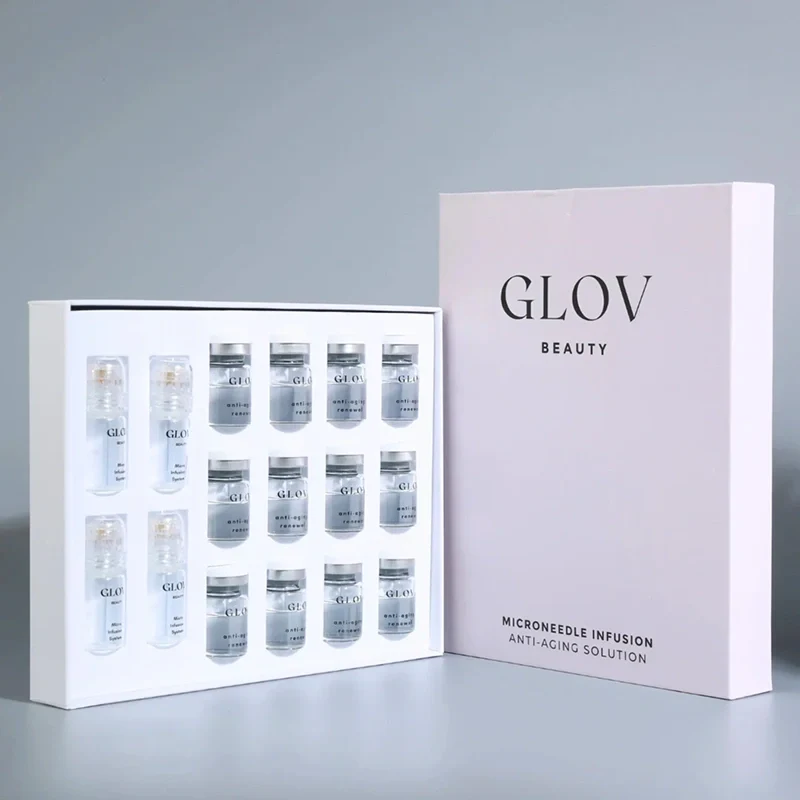
Glov (sold direct at GlovBeauty.com) undercuts the category on entry price and keeps the fundamentals intact: 24K gold 0.5mm clinical-grade hollow needles, a refillable chamber, disposable single-use heads, and a serum built around hydrolyzed collagen, sodium hyaluronate and a peptide complex. The pitch leans hard on clinic economics ("15x less than the average clinic price") and the brand's published results block reports 97% of users seeing smoother, clearer-looking skin. Glov is also the most relaxed brand about the eye zone, answering "yes" to use around the eyes, but note what does not change with that answer: the needles are still the same 0.5mm face calibration as everyone else's, and the brand's social-proof numbers vary noticeably from widget to widget.
"For a first, low-commitment try at the format on cheeks and forehead, Glov is easy to recommend. Its eye-area confidence, though, comes from marketing copy, not from a shallower needle."
Our reviewer's verdict
✓ Pros:
Lowest entry price of the five, hollow-needle infusion design with disposable heads, optional subscribe-and-save discount, 30-day money-back guarantee, free shipping over $50.
⚠ Cons:
Same 0.5mm face-calibrated depth despite the anything-goes eye messaging; inconsistent review counts across its own page (4,333 vs "23,750+"); serum choice is a single anti-aging formula.
Shop on GlovBeauty.com ↗
Stay Clear of These
✕
1. Reusable multi-pass dermarollers. Needles blunt and bend after a few uses, they are hard to disinfect properly at home, and rolling drags the needle through skin at an angle. Every system in our top five moved to disposable heads for a reason.
✕
2. Face-depth tools pressed into the eyelid or lash line. Whatever the marketing says, a 0.5mm face calibration does not become an eyelid tool because you press gently. Four of the five brands above restrict or caution against their own devices near the eyes; respect the zone or use a system calibrated for it.
✕
3. Unbranded kits with unsealed needle heads. If the needle heads do not arrive individually sealed and sterile, with a stated needle depth from a named brand, the discount is not worth the skin you are testing it on.
📈 Results Stack Over Time. Micro-infusion is not a quick fix; it is a routine. Like compounding interest, small consistent sessions, every one to two weeks, are what move the needle on how skin looks month over month. Whichever system fits you, the best predictor of being happy in week eight is simply still using it in week four.
Straight answers on hooded eyes, sagging eyelids and the five systems in this comparison.
Can at-home microneedling help hooded eyes or sagging eyelids?
+
It depends on what is causing the look. When hooding comes from thin, lax, crepey skin on the upper lid and brow bone, at-home microneedling with serum infusion targets exactly that surface: it is designed to support the skin's natural renewal and deliver actives where a cream only sits on top. Microneedling at home cannot move a brow, remove excess skin or tighten the muscle that lifts the lid. That is why we judged every system on how it treats the eye zone, and why only one in our roundup, Botanique Paris, is calibrated for it at 0.25mm. Individual results vary.
Is the best at-home microneedling kit for your face also the best for your eyes?
+
Usually not. The four face-first systems here all use a 0.5mm needle depth calibrated for cheeks and forehead, and their own instructions say so: Seranova asks you to stay about 3cm from the eye region, Glamory excludes eyelids and under-eyes, and Qure allows crow's feet only with gentle pressure and one pass. Eyelid skin is the thinnest on the body, so the right choice depends on the zone you are treating. For the upper lids, Botanique Paris builds its system at 0.25mm with an eye-specific serum.
What is the difference between microneedling and micro-infusion (microinfusion)?
+
Traditional microneedling creates micro-channels and delivers nothing through them; serum goes on afterwards and mostly sits on the surface. Micro-infusion, also spelled microinfusion, feeds serum through the needle tips while the channels are open, with a single-use sterile head every session. Several brands sell micro-infusion under the more familiar word "microneedling," which is why both terms come up when you shop.
What should I look for in an at-home microneedling device?
+
Four things, in this order: a stated needle depth that matches the zone you will treat; individually sealed, single-use sterile heads; a stamping motion rather than a roller on thin skin; and a guarantee you can actually use. In this roundup, guarantees run from 30 days (Glamory, Glov) to 120 days (Botanique Paris), and two brands require regular progress photos to claim theirs.
Is a micro-infusion facial at home the same as a clinic treatment?
+
It is a consumer version of the same idea. Clinic infusion facials appear on menus at $300 or more per session, usually booked as a series and performed by trained staff. Home kits use measured, sealed doses and sterile single-use heads so you can run a five-minute session yourself. They do not replace professional advice if you have an active skin condition.
Is Qure microneedling suitable around the eyes?
+
Qure is the best-documented face system in the category, with a published user study and an independent dermatologic safety evaluation. Its own guidance allows crow's feet with very gentle pressure and only one pass. The Qure micro-infusion heads are 0.5mm, calibrated for the face, so we treat the upper eyelid as outside its intended zone.
Can you use Seranova microneedling near the eyelids?
+
Seranova's own instructions say to keep about 3cm away from the eye region, and the brand points eye concerns to a separate patch product. For full-face use, the Seranova micro-infusion kit is one of the most reviewed in the category, with 6,690 reviews at 4.8 stars.
Can I use the Glamory micro-infusion roller on my eyelids?
+
Glamory explicitly excludes eyelids and under-eyes. The MicroLift is also the only roller in our roundup, and rolling drags 0.5mm needles at an angle across the skin, a poor match for lid skin. As a promo-priced option for cheeks and forehead, it is a reasonable value.
Is Glov (GlovBeauty.com) a good budget option?
+
For a low-commitment first try on cheeks and forehead, yes: Glov has the lowest entry price of the five, disposable heads, a 30-day money-back guarantee and free shipping over $50 at glovbeauty.com. Its eye-area messaging is more permissive than its hardware, though: the needles are the same 0.5mm face depth as the others.
How often should I do a hooded eye treatment at home?
+
Follow the protocol of the system you choose. Botanique Paris specifies twice a week on the brow bone and orbital rim, 5 to 7mm above the lash line, with a measured 0.5mL dose per session. Consistency matters more than intensity: results build over weeks of regular sessions, not overnight.
When should sagging or floppy eyelids be checked by a doctor?
+
If the lid itself droops over the pupil, one side drops suddenly, or the change affects your vision, see a doctor or eye specialist before trying any device. That can be true ptosis, a drooping muscle rather than lax skin, and no topical or needling routine is designed to treat it.
About the Author
I have spent nine years reviewing beauty devices, which mostly means reading the fine print brands hope you will skip. When I am not comparing needle depths, I am usually failing to keep basil alive on a Paris windowsill.
- Elena Marchetti, Senior Beauty Editor
Citations:
[1] Fernandes, D. (2005). Minimally invasive percutaneous collagen induction. Oral and Maxillofacial Surgery Clinics of North America, 17(1), 51-63.
[2] Aust, M. C., et al. (2008). Percutaneous collagen induction therapy: an alternative treatment for scars, wrinkles, and skin laxity. Plastic and Reconstructive Surgery, 121(4), 1421-1429.
[3] El-Domyati, M., et al. (2015). Multiple microneedling sessions for minimally invasive facial rejuvenation: an objective assessment. International Journal of Dermatology, 54(12), 1361-1369.
[4] Alster, T. S., & Graham, P. M. (2018). Microneedling: A review and practical guide. Dermatologic Surgery, 44(3), 397-404.
[5] Iriarte, C., et al. (2017). Review of applications of microneedling in dermatology. Clinical, Cosmetic and Investigational Dermatology, 10, 289-298.
[6] Kim, Y. C., Park, J. H., & Prausnitz, M. R. (2012). Microneedles for drug and vaccine delivery. Advanced Drug Delivery Reviews, 64(14), 1547-1568.
[7] Bissett, D. L., Oblong, J. E., & Berge, C. A. (2005). Niacinamide: A B vitamin that improves aging facial skin appearance. Dermatologic Surgery, 31, 860-865.
[8] Papakonstantinou, E., Roth, M., & Karakiulakis, G. (2012). Hyaluronic acid: A key molecule in skin aging. Dermato-Endocrinology, 4(3), 253-258.